
UNGA81 Side Event Highlighting Sepsis in Women and Children
On September 23 in New York, the Medical Women’s International Association (MWIA) convened a UNGA81 Side Event on “Women’s Health and Development for Attainment of SDGs.” The meeting brought together leaders and advocates to highlight the urgent need for greater investment in sepsis prevention and women’s health.
Dr. Mariam Jashi, CEO of the Global Sepsis Alliance (GSA) and Secretary General of MWIA, emphasized that without a stronger response to sepsis, the global community cannot achieve the health-related 2030 Sustainable Development Goals.
A video recording of Dr. Jashi’s intervention, “Invest in Sepsis. Invest in Women’s Health,” can be viewed above.
In her intervention, Dr. Jashi noted that sepsis remains a leading cause of death worldwide, affecting an estimated 48.9 million people annually, including 26 million women and 20 million children under the age of five. Sepsis accounts for 1 in every 5 deaths globally, claims the lives of 2.9 million children each year, and remains the third leading cause of maternal mortality.
Dr. Jashi highlighted that women and children living in low-resource settings are disproportionately affected, both in low- and middle-income countries and among socially disadvantaged populations in high-income countries. She also drew attention to the increased risk of sepsis among more than 360 million people affected by humanitarian crises and displacement due to man-made or climate emergencies, the majority of whom are women and children.
Reflecting on lessons from the COVID-19 pandemic, Dr. Jashi noted that 78% of ICU patients experienced viral sepsis, underscoring the importance of integrating sepsis into future pandemic preparedness and response.
She stressed that without significant political commitment and increased investment in research and resources for national, regional, and global sepsis responses, achieving the health-related 2030 Sustainable Development Goals will not be feasible—particularly those related to maternal, newborn, and child health, as well as aspirations towards Universal Health Coverage (UHC).
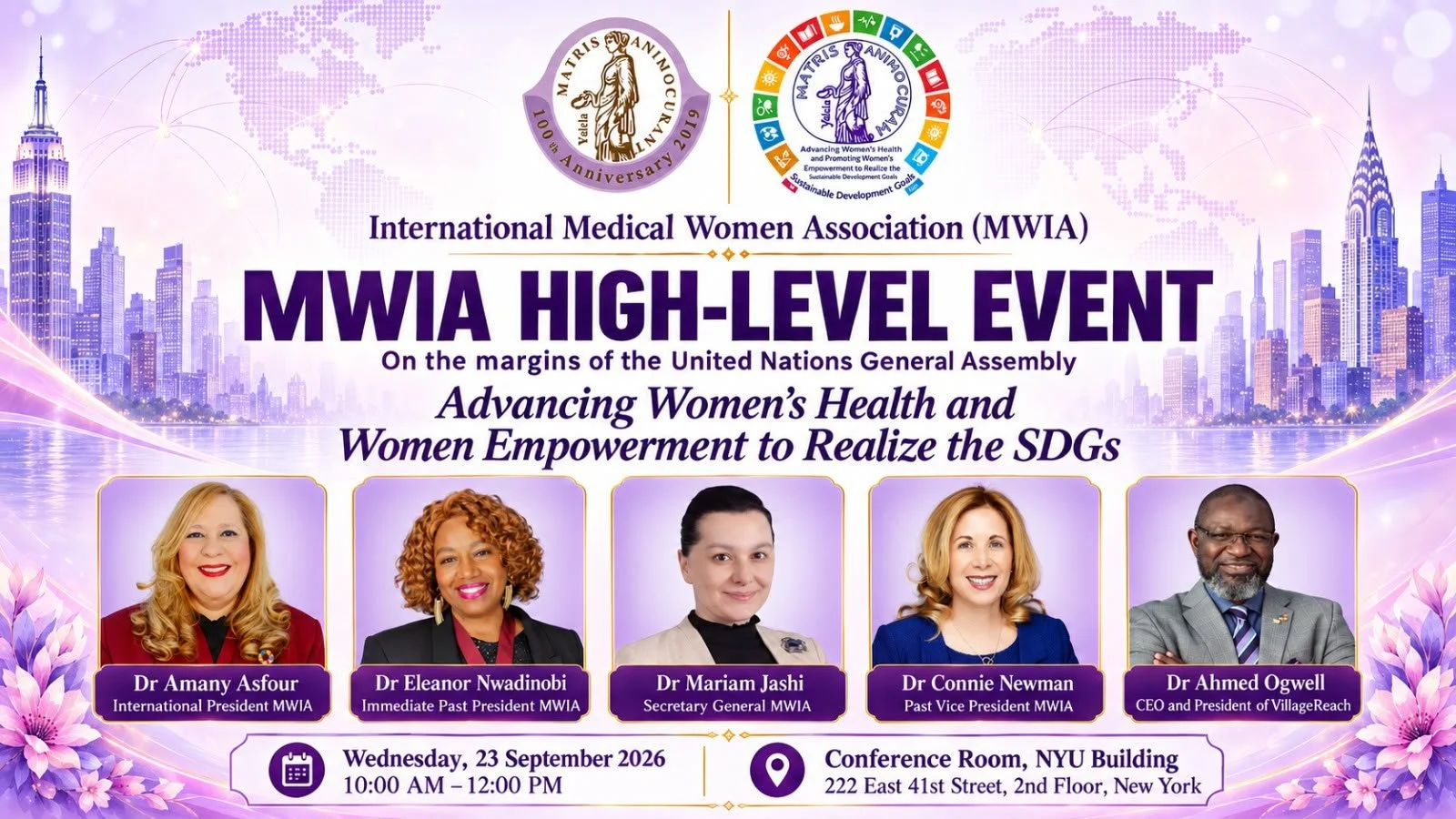
The meeting was led by Dr. Amany Asfour, President of MWIA, and attended by Dr. Eleanor Nwadinobi, MWIA Past President; Dr. Connie Newman (USA) and Dr. Bev Johnson (Canada), MWIA Representatives to the United Nations; Dr. Rummy Dosanji, MWIA Vice President for North America; representatives of UN ECOSOC-accredited civil society organizations; scientists; and leaders from women’s health organizations. Their participation reinforced the importance of collective action to address sepsis among women and children.
Dr. Jashi further emphasized that investing in sepsis means investing in stronger, more resilient health systems—from trained healthcare workers, primary and emergency care, infection prevention and diagnostics, to essential medicines, critical care, and survivor support.
She also presented the ambitions of the 2030 Global Agenda for Sepsis, which calls for reducing sepsis incidence by at least 25%, improving survival by more than 20%, and reducing the economic burden per patient by 20%. Achieving these goals could avert at least 12 million sepsis cases and save 2 million lives every year.
Priority actions included integrating sepsis into national health plans, maternal, newborn and child health programs, and pandemic and humanitarian preparedness; investing in sepsis science and innovation; mobilizing sustainable financing; and increasing sepsis literacy, with particular attention to women and children.
The Global Sepsis Alliance thanks MWIA for its continued strategic partnership and leadership in raising awareness of sepsis in women and children worldwide.